Patching In SeaTac & the Puget Sound
When cracks have already turned into holes or alligator-cracked sections, you need real patching, not more sealer over the problem. I cut out the bad asphalt, prep the sub-base, and patch with the right material for the load.
Available all winter on dry days
How I do it
Done right, start to finish.
- Square-cut, clean edges
- Compacted in lifts
- Driveways, lots, transitions
- Patch first, then seal
When you need it
Signs it's time.
- Potholes or spots where asphalt has broken loose
- Alligator cracking: a web of connected cracks
- Soft or sunken areas that hold water
- Crumbling edges where the driveway meets the road
Recent jobs
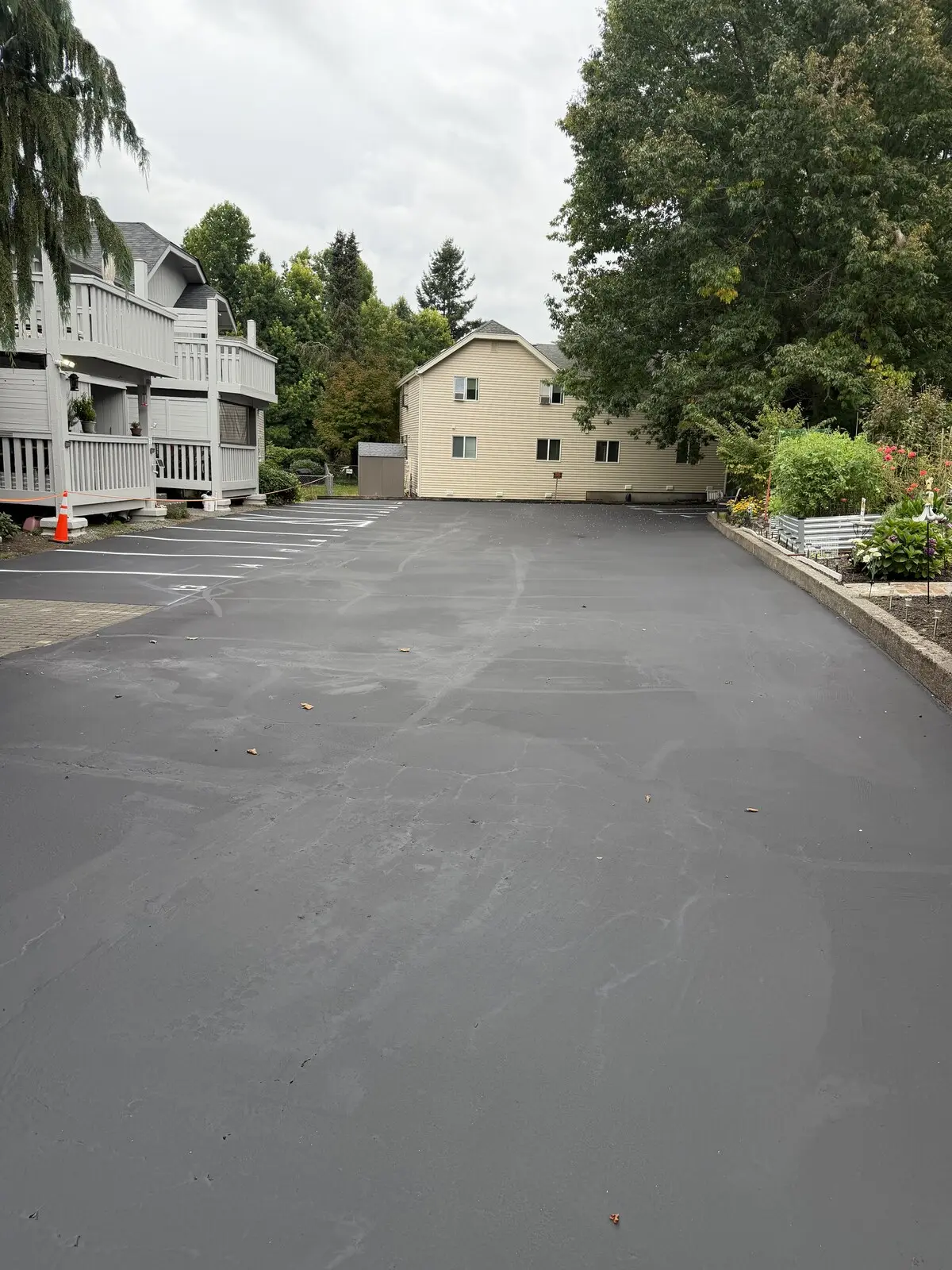
Patching on real driveways and lots.
Common questions
Patching, answered.
What's the difference between patching and crack filling?
Crack filling seals individual cracks so water can't get underneath. Patching is for asphalt that has already failed, like potholes and alligator cracking, where the damaged section is cut out and replaced.
Do you patch in the winter?
Yes. Patching continues through the winter on dry days.
Should a patch be sealed?
Patch first, then seal. Sealing over the patch protects it along with the rest of the surface and gives the whole area one even finish.
Other services
Available this winter
Book this winter.
Crack filling, patching, and striping continue all winter on dry days. Text or call 425-241-0918 with a few photos and I'll get you on the schedule.